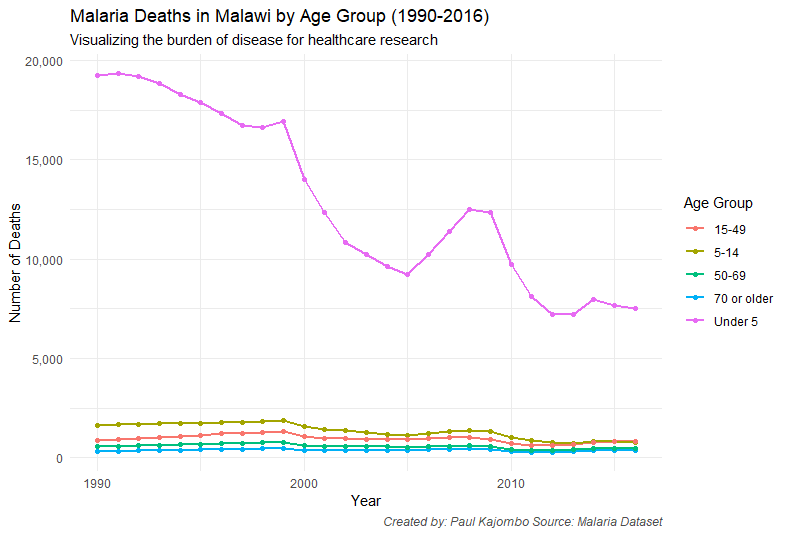
Longitudinal Malaria Mortality Analysis (1990–2016)
The Problem
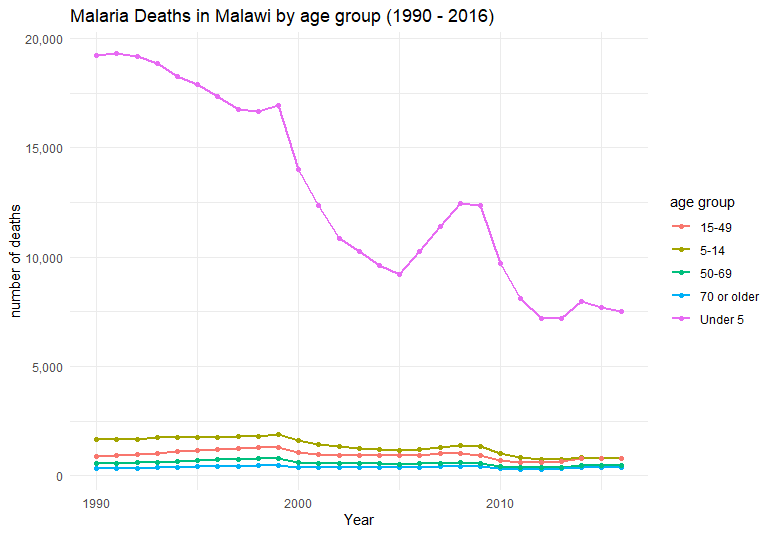
Malaria surveillance in Malawi required a more granular understanding of age-specific mortality. Standard visualizations often overshadowed trends in older populations due to the massive volume of childhood deaths, making it difficult to assess the efficacy of interventions across all age groups.
Methodology & Integrity
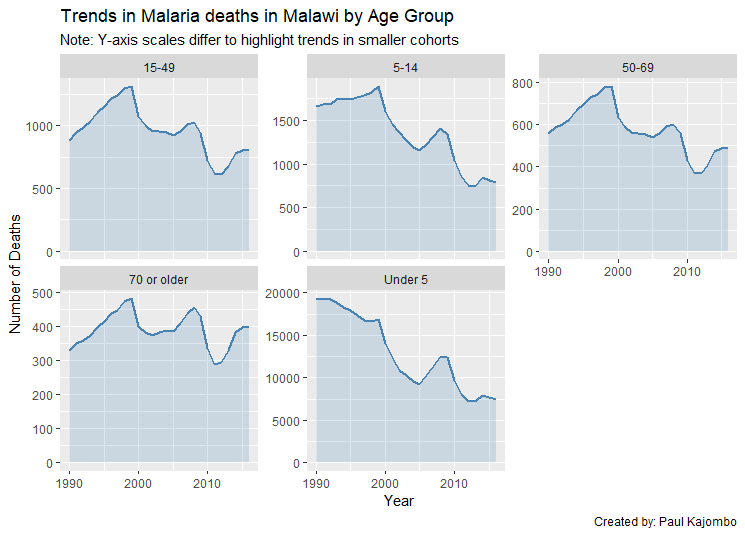
Utilizing a 26-year longitudinal dataset, we implemented data faceting with independent Y-axes. This statistical approach ensures that the mortality trajectories of smaller cohorts (e.g., age 70+) are visually accessible and not mathematically "silenced" by the Under-5 demographic.
Key Insights (The "So What?")
- Dramatic Reduction: Visualized a major decline in Under-5 deaths from nearly 20,000 in 1990 to under 8,000 by 2016.
- Synchronized Spikes: Identified parallel mortality surges in 2008–2010 across all age demographics, suggesting systemic environmental or reporting drivers.
Tech Stack
Analysis Visualizations